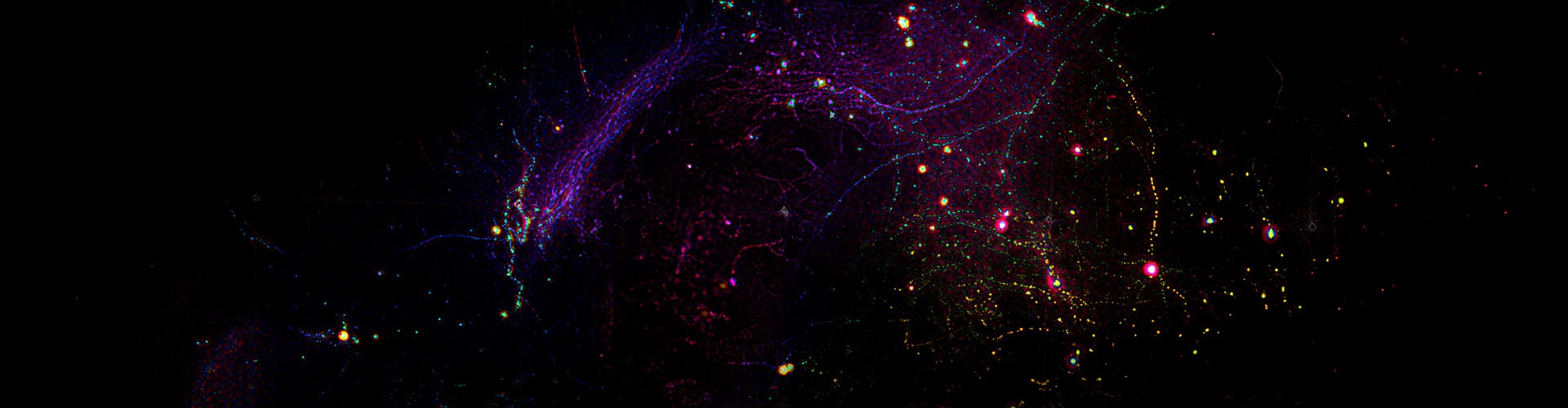
How does the brain coordinate thousands of neurons across many cortical regions as an animal explores, interacts with others and competes? Answering this requires watching large neuronal populations while animals behave as naturally as possible. Yet microscopes that resolve single neurons over large areas usually require head fixation or a cable, whereas head-mounted miniature microscopes that move with the animal typically see less than 1 mm of tissue.
On 19 October 2026, the teams of Qionghai Dai, Jiamin Wu and Yuanlong Zhang at Tsinghua University, working with Pu Dai’s team at the Chinese PLA General Hospital, published “Cortex-wide imaging in naturally behaving mice with 1-gram wireless mesoscopes” in Nature. The study reports Airscope, the first wireless mesoscope to record images above one megapixel. Weighing just 1 g without its battery, Airscope images the mouse cortex at single-cell resolution across a 6-mm field of view and records more than 8,500 neurons in a single mouse, about 25 times more than previous wireless imaging devices.
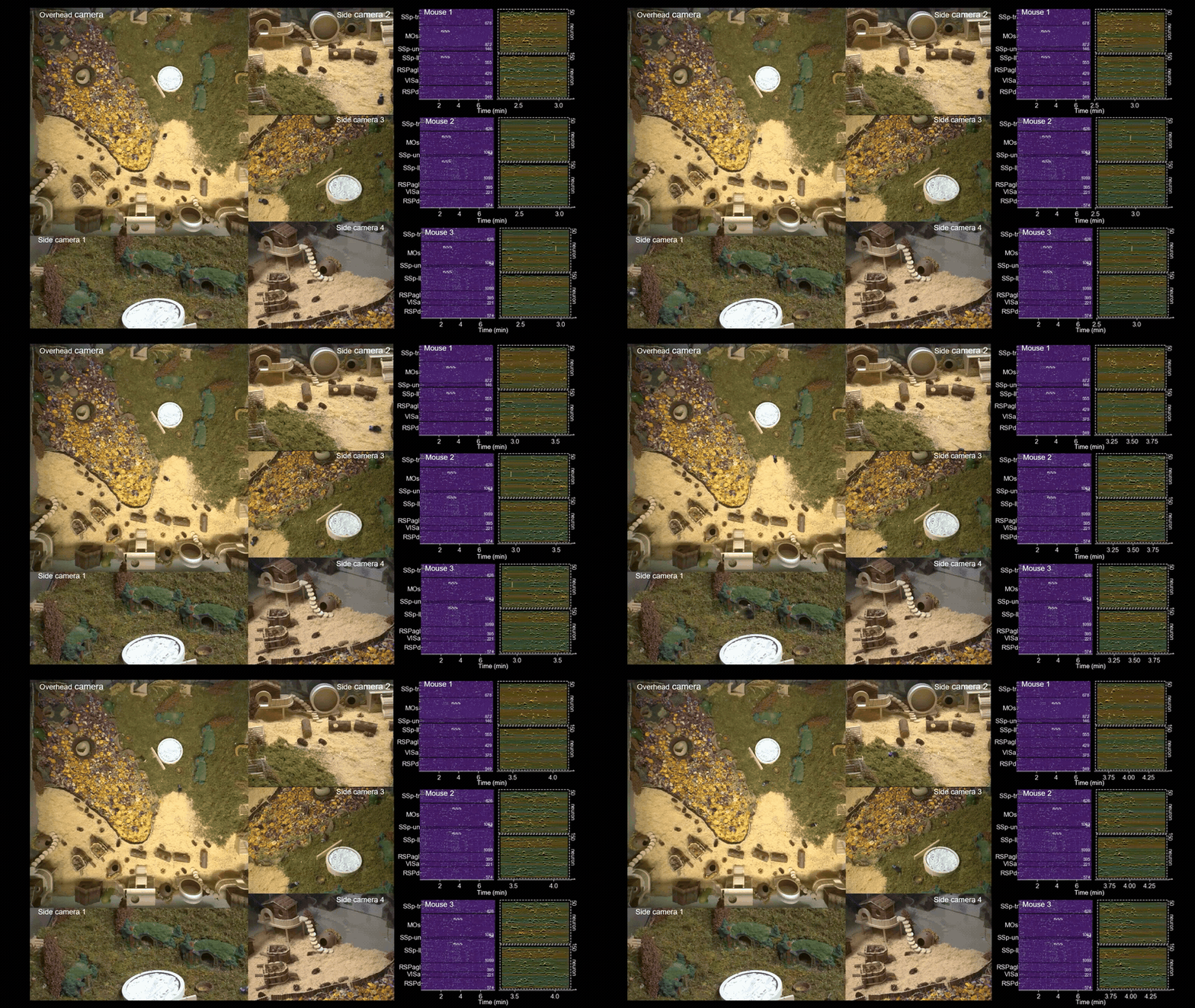
Fig. 1: Multi-view video of the 2.3 m × 2.3 m naturalistic habitat, in which three mice wearing Airscopes move freely while being recorded.
To make the microscope both wide-field and sharp, yet light and untethered, the team designed its optics, illumination, electronics and wireless link together. Four aspheric lenses deliver single-cell resolution (4–6 μm) across the 6-mm field of view with a total optical track about 65% shorter than that of previous miniature microscopes, making Airscope the smallest and lightest mesoscope reported to date. A 2-megapixel image sensor compresses data about 25-fold on the sensor so that megapixel images can be streamed wirelessly. The device is more than 30% lighter than the latest head-mounted mesoscopes, and its magnetic battery can be swapped in under 2 seconds. Mice wearing Airscope climbed ropes and walked through tubes, moving as far, as fast and along paths as winding as mice without the device.
Airscope is nearly five orders of magnitude smaller in volume than a conventional tabletop macroscope, yet records neuronal signals of comparable quality. Combined with the team’s DeepWonder neuron-extraction algorithm, it recorded more than 8,500 neurons across 14 cortical regions of one hemisphere in a single mouse. Alternating, near-simultaneous comparisons with two-photon microscopy confirmed the reliability of the signals, and the same site could be imaged over a span of more than 200 days.
To tell interacting mice apart, the team built SAM2Mice, a multi-animal segmentation and tracking tool based on the SAM2 vision foundation model that works in new settings without re-annotation or retraining. It tracked five mice with a multi-object tracking accuracy (MOTA) of 0.958 and processed video about 2,400 times faster than expert manual labelling. With five mice wearing Airscopes at once in a 60-cm arena, the team recorded more than 20,000 neurons during free social interaction.
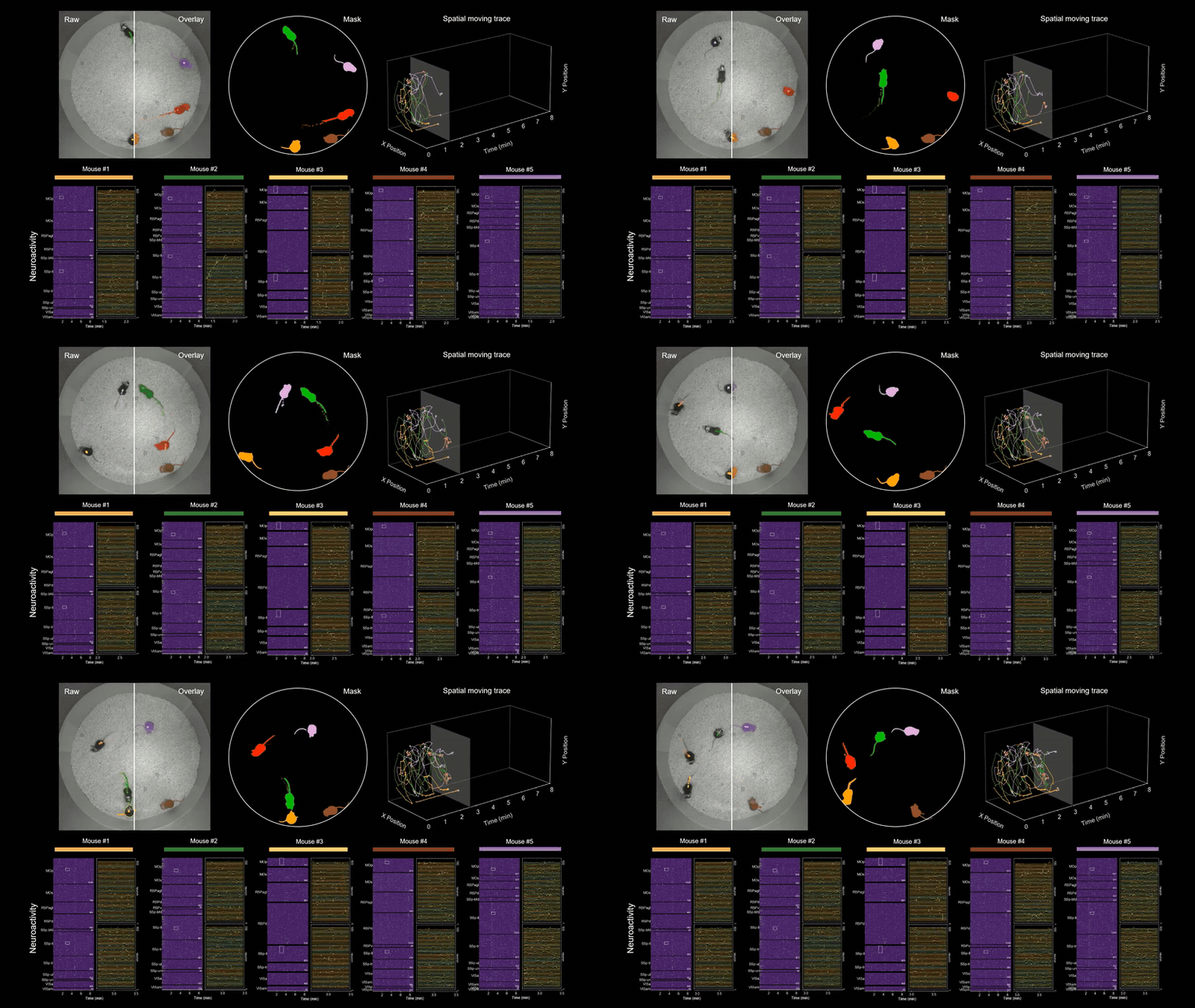
Fig. 2: Five mice wearing Airscopes interact freely; more than 20,000 cortical neurons were recorded in total.
Standard cages leave little room for natural behaviours such as long-distance exploration. The team therefore built a 2.3 m × 2.3 m naturalistic habitat with shelters, ramps, tree hollows and other terrain. Mice in the habitat moved more than twice as fast as in a home cage and displayed 16 types of behaviour, including climbing, stepping up and down stairs and entering holes. A classifier identified which zone of the habitat a mouse occupied from its cortical activity alone, well above chance. The team has made this habitat–neural dataset, the first of its kind, publicly available.
In the classic tube test, two mice meet in a narrow tube and push against each other until one retreats. Airscope recorded thousands of cortical neurons in both contestants at the same time. A dual-stream Transformer model predicted the winner from the two animals’ cortical activity with 81.8% accuracy, well above the 50% chance level, and its performance did not drop after the influence of measured movement and behavioural variables was removed.
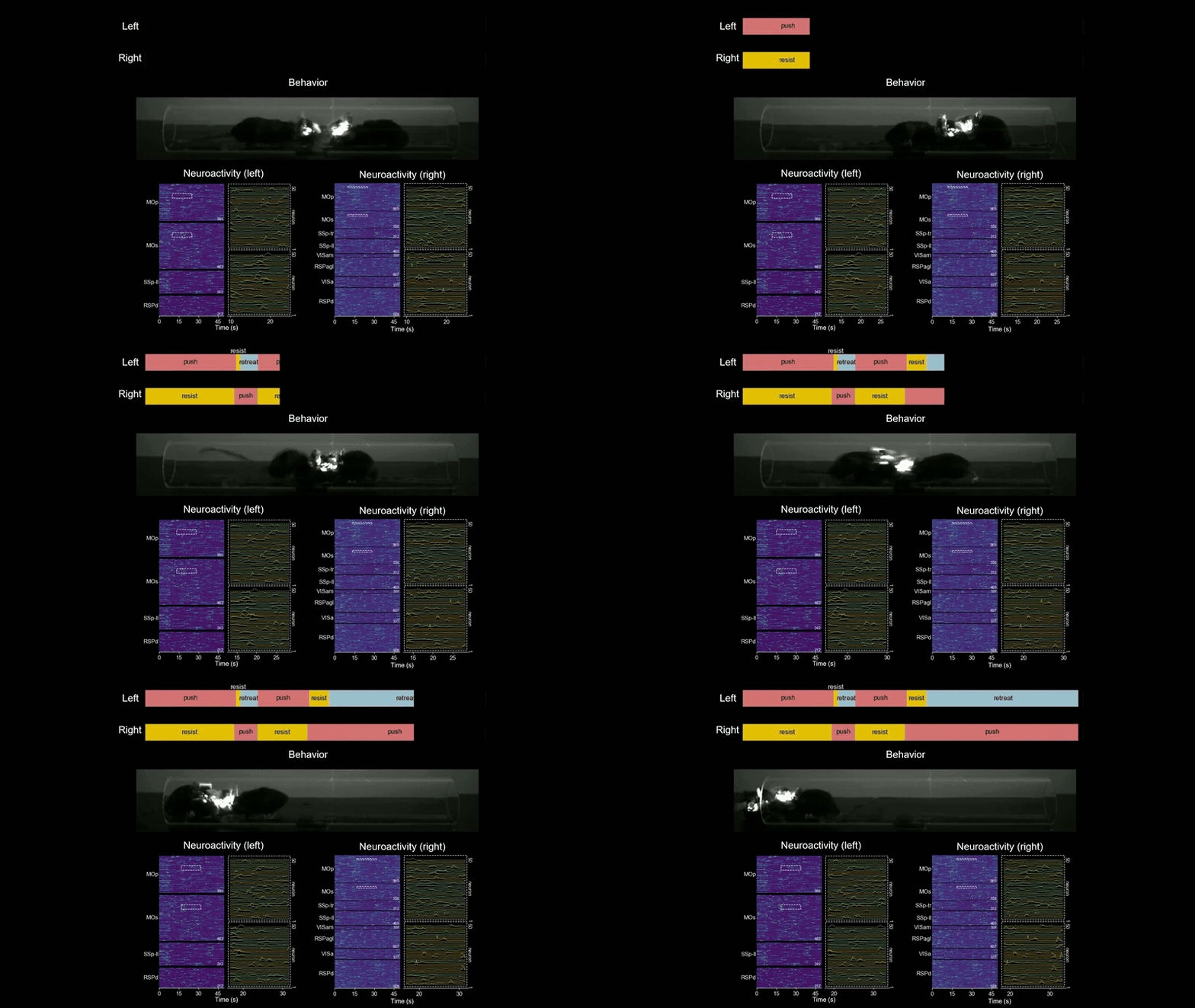
Fig. 3: In the tube test, two mice wearing Airscopes meet and push against each other while the cortical activity of both is recorded.
In a binary-tree maze with 32 ends, a latent state of cortical population activity aligned with the moment of reward, and this alignment weakened after the reward location was changed. By mounting one Airscope on the head and another on the back, the team imaged the cortex and spinal cord together in freely moving mice, recording about 4,000 cortical neurons in one hemisphere and population activity in two spinal segments. During fear-conditioning trials, spinal activity mainly led cortical activity.
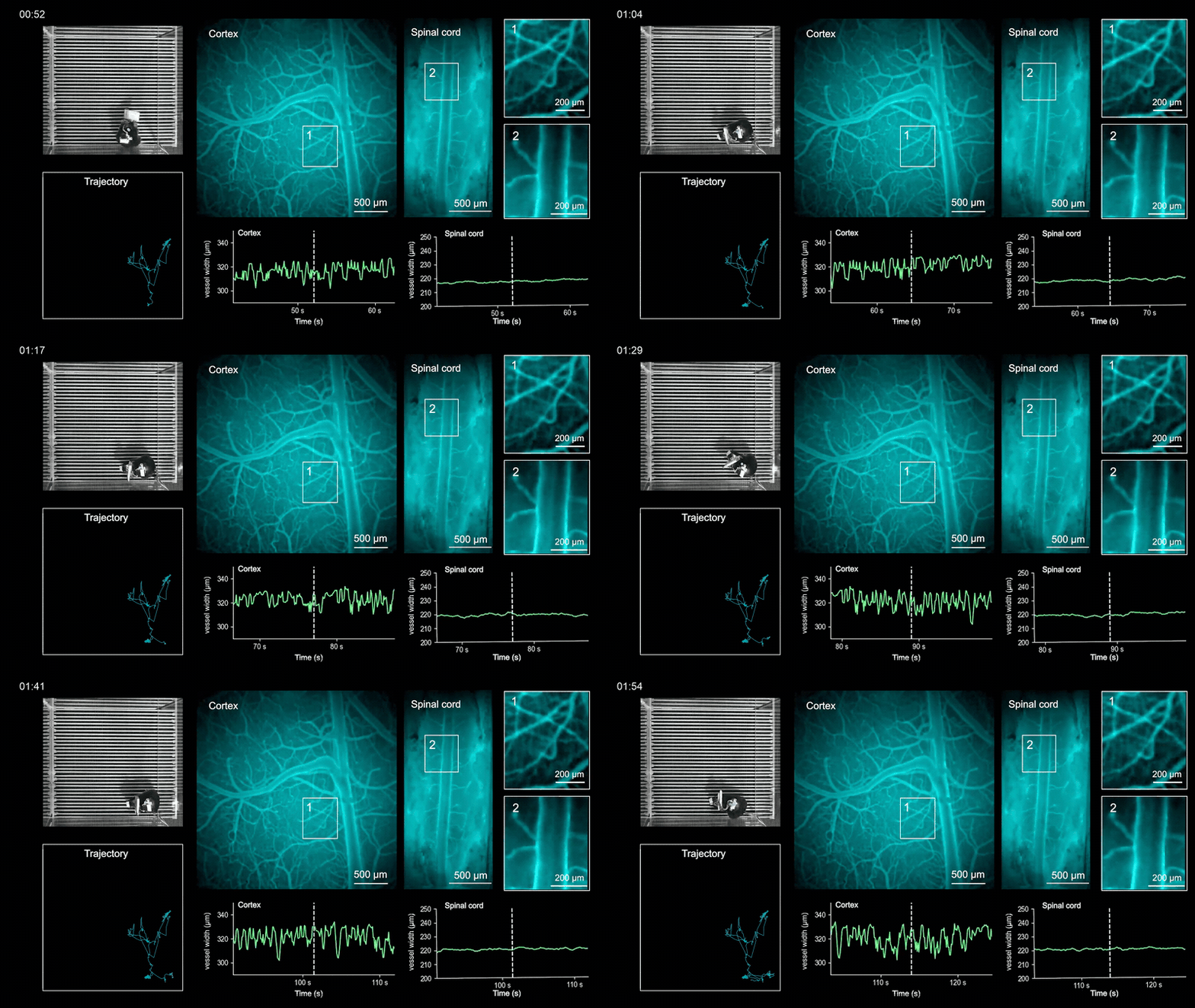
Fig. 4: Two Airscopes, one on the head and one on the back, image blood vessels in the cortex and spinal cord simultaneously.
By combining a large field of view, single-cell resolution and lightweight wireless operation, Airscope lets researchers observe large-scale neural activity under conditions much closer to natural behaviour. It provides a new tool for studying the neural basis of natural and social behaviour, for research on related brain disorders and for the development of optical brain–computer interfaces.
Yuanlong Zhang (assistant professor, School of Life Sciences and IDG/McGovern Institute for Brain Research, Tsinghua University), Angran Li (PhD student, Fudan University and Zhongguancun Academy), Lekang Yuan (PhD student, Department of Electrical and Computer Engineering, Princeton University), Mingrui Wang (associate professor, Northeastern University, China) and Weihao Zhao (Sixth Medical Center, Chinese PLA General Hospital) are co-first authors. Jiamin Wu (associate professor, Department of Automation, Tsinghua University), Pu Dai (professor, Chinese PLA General Hospital) and Qionghai Dai (professor, Department of Automation, Tsinghua University) are co-corresponding authors. The work was supported by the National Natural Science Foundation of China, the Beijing Natural Science Foundation, the New Cornerstone Science Foundation through the XPLORER PRIZE, the State Key Laboratory of Membrane Biology and the Beijing National Research Center for Information Science and Technology.
Paper: https://www.nature.com/articles/s41586-026-11293-x
Dataset: https://doi.org/10.6084/m9.figshare.33942097
Code (Airscope toolbox): https://doi.org/10.6084/m9.figshare.33942148

 Mailbox:qhdai@tsinghua.edu.cn
 Address:3rd floor, Central Main Building, THU, Beijing
 Fax:+86 10 62773433