Glasses-free three-dimensional (3D) display is recognized as a critical foundational technology for scenarios including digital twins, human-computer interaction, distance education and virtual social interaction, yet it has long been constrained by the core trade-off: the wider the viewing angle, the lower the resolution and the stronger the crosstalk. To address this bottleneck, a research team from Tsinghua University proposes the super-Snell scanning light-field display (SSS-LiD) technology. By integrating an ultrawide-angle, low-aberration refractive optical structure with holistic mechanical synchronous scanning, it delivers glasses-free 3D display with both an ultrawide viewing angle and high resolution.
The related work, titled Super-Snell scanning light-field display for ultrawide-angle high-resolution glasses-free three-dimensional displays, was published in Nature Photonics on June 17, 2026.

Figure 1: Working principle of SSS-LiD
The first key innovation of this work is the super-Snell lenticular lens array (SS-LLA), designed with inspiration from the "Snell's window effect". When traditional lenticular lens arrays are scaled to ultrawide viewing angles, they typically require larger elemental image sizes, and are prone to pronounced aberrations and crosstalk at peripheral viewing angles, making it difficult to balance viewing range and display quality. Through two consecutive refractions, this study expands the native projection range of approximately 52° to 150°, while significantly suppressing viewpoint crosstalk at the periphery via a compact, low-aberration structural design, offering a new optical implementation pathway for ultrawide-angle glasses-free 3D display.

Figure 2: System structure and resolution evaluation of SSS-LiD
The second key innovation is the proposed holistic mechanical scanning (HMS) method. Unlike conventional schemes that only scan the optical structure, HMS moves the display panel and lens assembly synchronously in the lateral direction as a single rigid unit, and achieves time-division multiplexing by leveraging the persistence of human vision, thus drastically boosting spatial sampling density.
Experiments demonstrate that this scheme improves the system's horizontal and vertical spatial resolution by approximately 8.0 times and 3.2 times respectively, while effectively mitigating image distortion caused by desynchronization between display content and scanning position — a common flaw in traditional mechanical scanning. Based on a 15.6-inch, 1080p, 360 Hz display panel, SSS-LiD achieves an effective resolution of nearly 480 pixels across its 150° ultrawide viewing angle, with angular crosstalk consistently below the acceptable threshold of 3%.

Figure 3: Experimental verification of SSS-LiD in 3D scenes
To validate the system's 3D display performance, the research team constructed a complex scene featuring undulating tracks at varying depths, moving spheres and occlusion baffles. The results show that SSS-LiD delivers continuous, stable motion parallax across the full 150° observation range, and accurately reproduces foreground-background occlusion relationships and spatial perspective rules.
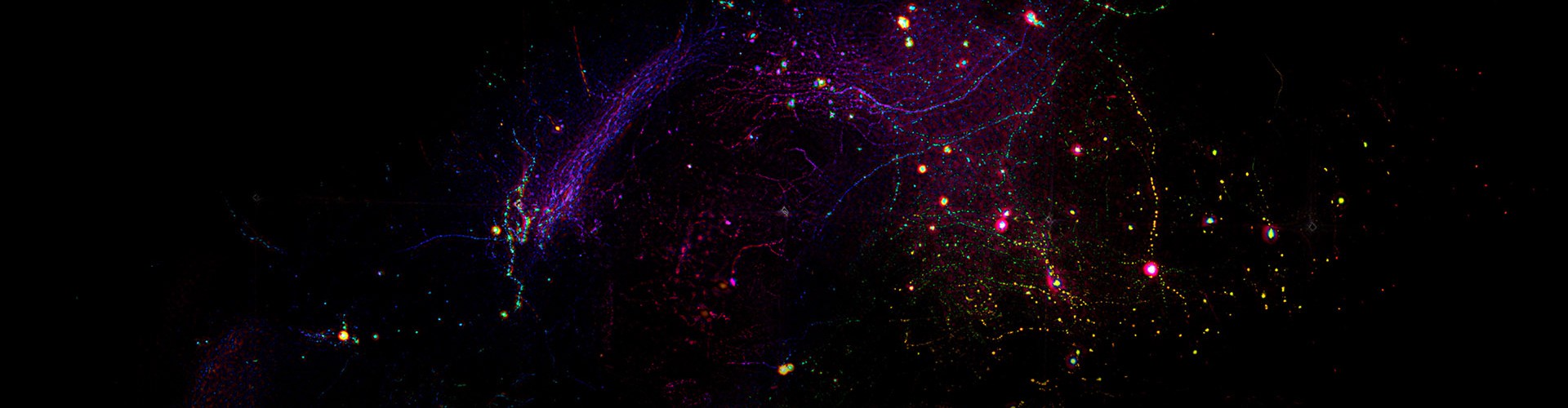
At observation angles of 0°, 30°, 60° and beyond, the system maintains high detail clarity: content closer to the screen surface exhibits higher resolution, and the central viewing zone delivers stronger depth-of-field performance. In addition to static 3D scenes, the paper also presents demonstrations of dynamic 3D content, biological microscopic data and scannable QR codes, indicating that the system is not only suited for immersive visual presentation, but also holds potential for expansion into fields such as biological visualization and machine vision.

Figure 4: Performance comparison between SSS-LiD and commercial light-field display systems
In a comparison with the Looking Glass 32-inch product — a leading commercial light-field display device — SSS-LiD shows remarkable advantages. The researchers conducted tests under normalized input pixel conditions to isolate the performance of the optical architecture itself. The results show that the system's viewing angle is nearly 3 times that of the commercial solution, its resolution is improved by 2.0 to 2.5 times across the entire observation range, and moiré patterns and artifacts are significantly reduced.
This indicates that SSS-LiD has not only achieved breakthroughs in laboratory metrics, but also demonstrated realistic potential for practical, commercial-grade glasses-free 3D display.
Admittedly, several issues remain to be optimized before the technology reaches full engineering application. First, compared with traditional lenticular lens arrays, SS-LLA introduces approximately 8.6 times more luminous flux loss; however, the paper notes that the current prototype already enables clear viewing under 4 W backlight power and 180 lux indoor lighting. Second, HMS relies on reciprocating scanning of the display module, requiring approximately 22 ms of black field during the commutation phase to avoid erroneous light integration. Future work will further improve transient dimming performance and long-term mechanical reliability via higher-dynamic-response actuators and optimized control algorithms.
Even so, this work clearly demonstrates that the long-standing "viewing angle–resolution–crosstalk" trade-off in glasses-free 3D display can be systematically alleviated through the collaborative approach of "ultrawide-angle low-crosstalk optical design + holistic synchronous scanning".
In terms of application prospects, SSS-LiD is expected to serve multi-user, free-viewpoint immersive scenarios such as digital twin interaction, cultural exhibition, advertising media and surgical navigation. For the glasses-free 3D display field, the significance of this research lies not only in pushing the viewing angle to the ultrawide 150° range, but also in proving the feasibility of simultaneously improving viewing angle and resolution in a compact system — providing a viable technical path for next-generation 3D display devices with high fidelity, ultra-immersion and practical usability.
The achievement was published in Nature Photonics on June 17, 2026, under the title Super-Snell scanning light-field display for ultrawide-angle high-resolution glasses-free three-dimensional displays. Academician Qionghai Dai and Associate Professor Jiamin Wu from the Laboratory of Imaging and Intelligent Technology of Tsinghua University are the co-corresponding authors; Yifan Chen is the first author; Yunmin Zeng, Tao Yu, Yuduo Guo, Yuwang Wang, Zhi Lu and others are co-contributors. This research was supported by the National Key Research and Development Program of the Ministry of Science and Technology.

 Mailbox:qhdai@tsinghua.edu.cn
 Address:3rd floor, Central Main Building, THU, Beijing
 Fax:+86 10 62773433