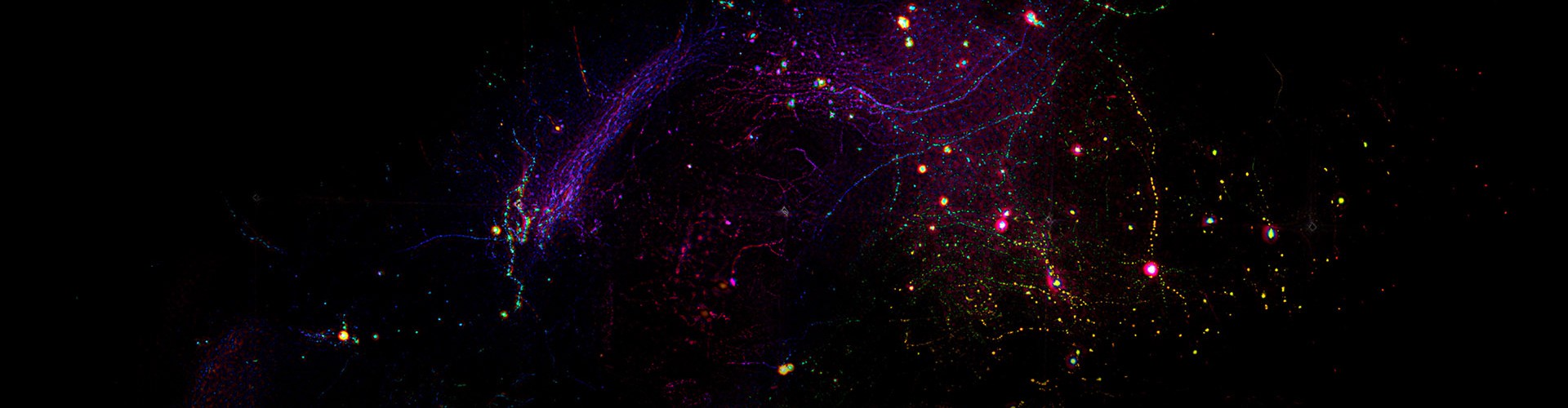
From April 19 to 21, 2026, the First International Conference on Mesoscale Biology (ICMB 2026) was successfully held at the Royal Society in London, United Kingdom. Over the past decade, the rapid advancement of mesoscale in vivo imaging technologies has given rise to the emerging discipline of mesoscale biology. The successful convening of this conference marks a new stage in the development of this interdisciplinary field.

Audience at the conference
The conference was co-chaired by Professor Qionghai Dai, Academician of the Chinese Academy of Engineering, President of the Chinese Association for Artificial Intelligence, and Professor at Tsinghua University, together with Professor Michael Häusser, Fellow of the Royal Society and Professor at The University of Hong Kong and University College London. The conference brought together leading researchers from around the world, with invited speakers from 18 prestigious universities and research institutions across 6 countries, including Massachusetts Institute of Technology, Stanford University, the Allen Institute, the Howard Hughes Medical Institute, Zhejiang University, the Institute of Automation of the Chinese Academy of Sciences, and University College London, etc. Participants shared groundbreaking achievements in mesoscale imaging and mesoscale biology, particularly in the field of brain science.

Conference Chair Professor Qionghai Dai Delivers Opening Keynote Lecture
During the opening remarks, Professor Michael Häusser reviewed the development of mesoscale in vivo imaging and related computational technologies over recent decades, highlighting the major scientific discoveries enabled by these advances and emphasizing the importance of investigating brain science and other biological questions at the mesoscale level. Professor Qionghai Dai welcomed the distinguished participants and shared the original vision behind establishing the mesoscale biology research community. He then delivered the conference’s first keynote lecture, titled “A Decade of Exploration and Practice in Mesoscale In Vivo Imaging,” in which he systematically reviewed his team’s research journey and key breakthroughs in the field. The presentation received enthusiastic responses from attendees. Throughout the conference, experts engaged in in-depth discussions on the critical role of mesoscale imaging in bridging molecular-level mechanisms and whole-brain network studies, recognizing its importance for understanding the mechanisms underlying biological cognition and intelligence.
During the conference, a total of 22 thematic presentations were delivered across 6 sessions, focusing on key issues at the intersection of mesoscale brain science and in vivo imaging. Topics covered imaging technologies, data analysis, and neuroscience discoveries. In the imaging technology sessions, Professors Gail McConnell (University of Strathclyde), David Kleinfeld (University of California, San Diego), Mark Schnitzer (Stanford University), and other leading researchers presented the latest advances in mesoscale microscopy technologies and discussed their emerging applications in biological research. In the data analysis sessions, Professors Jonathan Pillow (Princeton University), Kenneth Harris (University College London), Ila Fiete (Massachusetts Institute of Technology), and others introduced new discoveries in computational neuroscience based on large-scale in vivo recording. In the neuroscience sessions, Professors Neil Burgess (University College London), Abdel El Manira (Karolinska Institute), Michael Higley (Yale University), and other professors shared recent advances in applying mesoscale biology to the study of navigation, motor control, learning, and other related topics. Participating experts agreed that the continuous development of mesoscale in vivo imaging and analytical technologies is helping to bridge previous gaps in multiscale observation of complex living systems, thereby advancing integrated understanding across multiple levels — from microscopic to mesoscale and macroscopic scales, from individual cells to biological systems, and from fundamental mechanisms to behavioral phenotypes.

Audience at the conference
As a major outcome of the conference, Professors Qionghai Dai and Michael Häusser jointly initiated the establishment of the International Mesoscale Biology Research Network. Built upon the principles of long-term collaboration and open sharing, the network aims to strengthen collaborative innovation within the global scientific community and promote deeper cross-regional and interdisciplinary cooperation. By leveraging coordinated international research efforts, the initiative is expected to further expand the frontiers of integrated research in brain science and artificial intelligence.

Group photo of all participants
Looking ahead, the ICMB conference series will continue to promote international exchange and collaboration in related fields. The next conference is planned to be held in Hangzhou, China, in 2027, providing an opportunity for the world to witness China’s scientific innovations and serving as a new platform, new opportunity, and new benchmark for mutually beneficial collaboration between Chinese and international scientists.

Distinguished Conference Speakers
ICMB 2026 website: https://event.caai.cn/cms/ICMB/15845/list.html

 Mailbox:qhdai@tsinghua.edu.cn
 Address:3rd floor, Central Main Building, THU, Beijing
 Fax:+86 10 62773433